If you are trying to conceive, timing is everything. An ovulation kit, also called an ovulation predictor kit, helps you find your most fertile days by detecting the hormone surge that happens just before your ovary releases an egg. This guide explains how these kits work, how to use one correctly at home, how to read your results, and when it makes sense to speak with a fertility specialist at Motherhood Fertility & IVF.
What Is an Ovulation Kit?
An ovulation kit is a simple home test that predicts when you are about to ovulate. It works much like a pregnancy test in format, but instead of detecting pregnancy, it detects a hormone that rises just before ovulation. Many people use the terms ovulation predictor kit, ovulation test, or ovulation sticks to describe the same thing, and you may also see them sold as strips, midstream tests or digital devices.
The purpose is straightforward: to identify your fertile window so you can time intercourse and improve your chances of conceiving. Some tests are also known as an opt test or opk test in fertility communities, where OPK stands for ovulation predictor kit.
What is an ovulation test, and what does it detect?
What is an ovulation test in simple terms? It is a urine test that measures luteinising hormone, or LH. When LH rises sharply, ovulation is usually close. That is the entire idea behind the ovulation kit meaning: it turns an invisible hormone change into a clear positive or negative result you can read at home.
How Does an Ovulation Kit Work? The LH Surge Explained
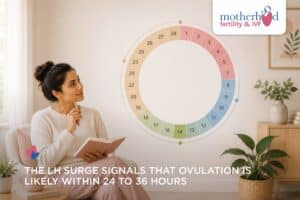
Understanding how an ovulation kit works makes the results far easier to trust. Throughout your cycle, your body produces small amounts of luteinising hormone. Around the middle of your cycle, LH rises sharply in what is called the LH surge. This surge triggers your ovary to release an egg, usually within 24 to 36 hours.
An ovulation kit detects this surge in your urine. LH appears in urine roughly 12 hours after the surge begins, so a positive result tells you that ovulation is likely within the next day or so. This is the most fertile point in your cycle, because an egg lives for about 12 to 24 hours after release, while sperm can survive for up to five days inside the body.
That combination is why the fertile window spans several days: from about five days before ovulation to one day after. Home kits and clinical female fertility services at Motherhood Fertility & IVF aim to pinpoint this window, one at home and one with medical precision.
When Should You Start Testing?
Knowing when to use an ovulation kit is just as important as knowing how. Testing on the wrong days is the most common reason people miss their surge. The right starting day depends on your usual cycle length.
For a regular 28-day cycle, most people start testing around day 10 or 11, counting day one as the first day of your period. If your cycle is shorter or longer, you adjust accordingly. A useful guide for when to check ovulation is to begin about four days before you expect to ovulate.
Here is a quick reference many readers find helpful:
| Your cycle length |
Approx. ovulation day |
Start testing around |
| 26 days |
Day 12 |
Day 8 |
| 28 days |
Day 14 |
Day 10 |
| 30 days |
Day 16 |
Day 12 |
| 32 days |
Day 18 |
Day 14 |
What time of day is best, and how often?
The best ovulation test time is usually late morning to early evening, not first thing in the morning, because LH is made earlier in the day and takes time to show in urine. Aim to test at roughly the same time daily. Many people test once a day but testing twice a day can help you catch a short surge. Try not to drink large amounts of fluid in the two hours before testing, as very diluted urine can affect the result.
When to test with irregular cycles
If your periods are irregular, when to use the ovulation kit becomes trickier, because your ovulation day shifts. In this situation, testing over a wider span of days helps, but it can also become frustrating and use up many strips. If you have irregular cycles, it is worth reading the section below on PCOS and irregular periods and considering a consultation.
How to Use an Ovulation Kit at Home, Step by Step
Learning how to use an ovulation kit correctly takes only a minute, and doing it properly gives you reliable results. The exact steps for how to use an ovulation test kit vary slightly by brand, so always read the leaflet that comes with your pack, but the general method for how to use an ovulation kit at home is the same across most tests.
Here is how do you use an ovulation test in practice:
- Collect your urine: Either hold the test strip in your urine stream for the number of seconds stated on the pack, or collect urine in a clean, dry cup and dip the strip to the marked line. Testing with the second urine of the day, rather than your very first morning sample, often gives a clearer reading, because luteinising hormone builds up in the body through the morning.
- Wait for the result: Lay the test flat on a clean surface and wait the full time stated in the instructions, usually 3 to 5 minutes, so both the control line and the test line can develop fully before you judge the result.
- Read within the time window: Read the result at the recommended moment, as reading too early may miss a rising line and reading too late can create a false or misleading line once the strip dries out.
- Record it: Note whether the result is positive or negative, along with the date and time, so you can track how your surge builds across the cycle and spot the day your test line becomes strongest.
Correct ovulation kit use also means testing at a consistent time each day and avoiding large amounts of fluid in the two hours beforehand, since diluted urine can weaken the test line and hide a genuine surge. Simple habits like these make a real difference to accuracy.
How to Read Your Results: Positive, Negative and the C and T Lines
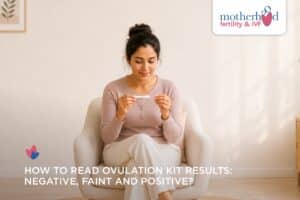
Reading your ovulation kit results is where many people feel unsure. Most strip tests show two lines: a control line, marked C, and a test line, marked T. The control line confirms the test worked. The test line shows your LH level.
What Does an Ovulation Kit Positive Result Mean?
An ovulation kit positive result means the test line is as strong as, or stronger than, the control line. This is the key difference from a pregnancy test, where even a faint line counts. With ovulation tests, only a test line that matches or exceeds the control line counts as positive. An ovulation kit positive means your LH has surged and ovulation is likely within 24 to 36 hours, so this is your most fertile time.
What a negative or faint result means
If the test line is lighter than the control line, the result is negative, and your surge has not happened yet. A faint or ovulation kit light line is still a negative; it simply means some LH is present, but the surge has not peaked. Keep testing daily until the line strengthens to match the control.
Here is a simple way to read your ovulation test kit results:
| Result |
Test line (T) vs Control line (C) |
What it means |
| Negative |
T lighter than C |
Surge not yet detected, keep testing |
| Faint / light line |
T faintly visible |
LH rising, surge not peaked yet |
| Positive |
T as strong as or stronger than C |
LH surge detected, ovulation likely in 24 to 36 hours |
| Invalid |
No control line |
Test failed, repeat with a new strip |
Consistent reading of ovulation tests across several days shows you the pattern, from faint lines to a clear positive, which is far more useful than a single test.
What to Do After a Positive Result: Timing the Fertile Window
Once you see an ovulation kit positive result, the timing becomes simple. A positive means ovulation is likely within 24 to 36 hours, so the day of your positive and the following day are your most fertile. If you are trying to conceive, this is the ideal time for intercourse.
Because sperm can survive for several days, having intercourse in the one to two days leading up to and including your positive gives the best chance of conception. There is no need to wait for the exact moment of ovulation. Many couples find that a positive result takes the guesswork out of timing, which can reduce stress during the trying to conceive journey. If you have been timing intercourse well for several cycles without success, that is a good moment to seek fertility care for a proper evaluation.
How Accurate Are Ovulation Kits? Limitations and False Positives
Home ovulation tests are reliable when used correctly and “are ovulation kits accurate” is a fair question to ask. In general, they detect the LH surge accurately in most cycles. However, no home test is perfect, and it helps to know the limits so you can judge “is the ovulation kit reliable” for your situation.
False positives can happen. Certain conditions, including PCOS, can cause LH to stay high or spike more than once, which may produce a positive result when ovulation is not actually about to occur. Some fertility medications also affect LH readings. A test can also mislead if you read it too late, or if your urine is very diluted. This is why ovulation test results are best read as a pattern across several days, rather than relying on one strip. If your results are confusing month after month, a clinical assessment is the most reliable next step.
Can an Ovulation Kit Detect Pregnancy?
This is one of the most common questions, and the answer is important. Can an ovulation kit detect pregnancy? No. An ovulation kit detects LH, the hormone that rises before ovulation, while a pregnancy test detects hCG, the hormone produced after implantation. Although the two hormones are chemically similar, an ovulation test is not designed to confirm pregnancy.
Sometimes an ovulation test as a pregnancy test may appear positive because of the hormone overlap, but this is unreliable and should never replace a proper pregnancy test. Using an ovulation kit as a pregnancy test can lead to false hope or false worry. If you think you may be pregnant, take a dedicated pregnancy test and confirm with your doctor.
Ovulation Kits with PCOS or Irregular Cycles: Why They Can Mislead
For women with PCOS or irregular periods, home kits are least reliable, and this is exactly where clinical expertise matters most. PCOS often causes raised LH levels throughout the cycle, which can make an ovulation kit show repeated or false positives, even when ovulation is not happening. Irregular cycles also make it hard to know when to start testing, so the surge is easily missed.
If you are trying to check ovulation at home with irregular cycles and the results are inconsistent, this is a signal to move from home testing to medical tracking. At Motherhood Fertility & IVF, doctors use ultrasound follicular tracking and blood tests to monitor ovulation precisely, which is far more accurate than a home strip for these conditions. This clinical approach is part of ovulation induction and cycle monitoring, where medication and scans help stimulate and time ovulation under expert care.
When to See a Fertility Specialist
An ovulation kit is a helpful first step, but it is only a predictor, not a full fertility assessment. It is a good idea to consult a fertility specialist if:
- You are under 35 and have been trying to conceive for 12 months without success.
- You are 35 or older and have been trying for 6 months.
- Your cycles are irregular, very long or absent.
- Your ovulation kit results are consistently confusing or always negative.
- You have PCOS, endometriosis, thyroid concerns or a known fertility condition.
At Motherhood Fertility & IVF, fertility specialists move beyond home testing to accurately track ovulation, identify the cause of any delay, and build a personalised plan. To speak with a specialist, you can call 080 6723 8900 or book a consultation online.
Consult a Fertility Specialist at Motherhood Fertility & IVF
At Motherhood Fertility & IVF, experienced fertility specialists across India combine advanced reproductive medicine with personalised, evidence-based care. If you’re trying to conceive, knowing your fertile window is often the first step, use our ovulation calculator to identify your most fertile days, and consult a specialist if conception hasn’t happened after several months of trying. Meet our fertility experts across our centres:
| Doctor |
Qualifications |
Specialisation |
Location |
| Dr. Rakhi Goyal |
MBBS, MD (Obstetrics and Gynaecology), FNB (Reproductive Medicine), FICOG |
Fertility & Reproductive Medicine |
Chandigarh, Mohali |
| Dr. Abhineya A. R. |
MBBS, MD (OBG), PDFRM |
Fertility & Reproductive Medicine |
Coimbatore |
| Dr. Amitha N. |
MBBS, MS (OBG), Fellowship in Reproductive Medicine |
Fertility & Reproductive Medicine |
Electronic City, Sarjapur |
| Dr. Anitha B. R. |
MBBS, MD (OBG), NUH Certified (Singapore), Fellowship in Infertility |
Fertility & Reproductive Medicine |
Whitefield, Bangalore |
| Dr. Anupama Ashok |
MBBS, MS (OBG), Fellowship in Reproductive Medicine |
Fertility & Reproductive Medicine |
Hebbal |
| Dr. Anuranjita Pallavi |
MBBS, MS (OBGY) – Gold Medalist, Fellowship in Reproductive Medicine (FRM) |
Fertility & Reproductive Medicine |
Navi Mumbai |
| Dr. Asha Baxi |
MBBS, MS, FICOG, FRCOG |
Fertility & Reproductive Medicine |
Indore |
| Dr. Beena Muktesh |
MBBS, MS (OBG), Medical Director – Reproductive Medicine |
Fertility & Reproductive Medicine |
Gurgaon |
| Dr. Bhavana Girish |
MBBS, MD, DNB, FRM, FMAS |
Fertility & Reproductive Medicine |
Banashankari, Bangalore |
| Dr. Bhavya Jha |
MBBS, MS (OBG), Fellowship in Reproductive Medicine, Fellowship in Gynae Endoscopy |
Fertility & Reproductive Medicine |
Gurgaon |
| Dr. D Maheswari |
MBBS, DGO, DNB, ICOG (Fellow in Reproductive Medicine) |
Fertility & Reproductive Medicine |
Chennai |
| Dr. Dhaval A. Baxi |
MBBS, DNB, DGO, MCh (Reproductive Medicine, Surgery) |
Fertility & Reproductive Medicine |
Indore |
| Dr. Gowthami Krishna |
MBBS, MS (Obstetrics & Gynaecology), MRCOG, FRM |
Fertility & Reproductive Medicine |
Kothanur |
| Dr. Jyoti Gupta |
MBBS, MD, DNB, MNAMS, FMAS, DCR, MRCOG (I) |
Fertility & Reproductive Medicine |
Gurgaon |
| Dr. Kathyaini V. S. |
MBBS, DGO, Fellowship in Reproductive Medicine |
Fertility & Reproductive Medicine |
Banashankari |
| Dr. Kusuma M Vijay |
MBBS, DGO, DNB (Obstetrics & Gynaecology) |
Fertility & Reproductive Medicine |
HRBR Layout |
| Dr. Madhu Patil |
MBBS, DGO, DNB, Diploma in Reproductive Medicine (Germany) |
Fertility & Reproductive Medicine |
Electronic City, Sarjapur |
| Dr. Madhura Phatak |
MBBS, MS (OBG), FRCOG, MRCOG, CCT (UK), Fellowship in Laparoscopic Gynaecological Surgeries & Urogynaecology, Certification in Colposcopy |
Fertility & Reproductive Medicine |
Mysore |
| Dr. Mandavi Rai |
MBBS, MS (OBG), M.MAS, PGDS, Fellowship in Reproductive Medicine (Singapore), PG Diploma in Reproductive Medicine & Sexual Health (UK) |
Fertility & Reproductive Medicine |
Noida Extension, Noida Sector 48 |
| Dr. Meenu Handa |
MS (OBGS), DNB, FICOG, FRM – Reproductive Medicine |
Fertility & Reproductive Medicine |
Gurgaon |
| Dr. Meghana Subramanya H |
MBBS, MS (OBG), FIRM [RGUHS] |
Fertility & Reproductive Medicine |
Hebbal |
| Dr. Mirudhubashini Govindarajan |
MBBS, FRCS (Canada) |
Fertility & Reproductive Medicine |
Coimbatore |
| Dr. Mrunalini Jagne (Ahire) |
MBBS, MS (OBGY), Fellowship in IVF & RM (FRM), Advance D.ART (Germany) |
Fertility & Reproductive Medicine |
Navi Mumbai |
| Dr. Pallavi |
MBBS, MS (OBG), Fellowship in Reproductive Medicine |
Fertility & Reproductive Medicine |
Gurgaon |
| Dr. Poonam Garg |
MBBS, MD, Masters in Maternal Fetal Medicine (Spain) |
Fertility & Reproductive Medicine |
Chandigarh, Mohali |
| Dr. Priyanka Reddy |
MBBS, MS (OBG), Fellowship in Reproductive Medicine, Fellowship & Diploma in Minimal Access Surgery |
Fertility & Reproductive Medicine |
Kothanur, HRBR Layout |
| Dr. Ramya Jayaram |
MBBS, MS (OBG) |
Fertility & Reproductive Medicine |
Coimbatore |
| Dr. Rita Modi |
MBBS, Fellow in Reproductive Medicine |
Fertility & Reproductive Medicine |
Navi Mumbai |
| Dr. Sandhya Ghode |
MBBS, MS, DNB, FICOG (BOM) |
Fertility & Reproductive Medicine |
Indiranagar, Jeevanbhima Nagar Clinic |
| Dr. Sharvari Mundhe |
MBBS, MS (OBG), DNB, FRM, DRM (Diploma in Advanced ART) |
Fertility & Reproductive Medicine |
Sarjapur |
| Dr. Shweta Nayak |
MBBS, DNB (OBG), MNAMS, CCGDM, KISAR Fellowship in Infertility, Fellowship in Basic Ultrasound |
Fertility & Reproductive Medicine |
Mysore |
| Dr. Sindhuri T. R. |
MBBS, MS (OBG), Fellowship in Reproductive Medicine |
Fertility & Reproductive Medicine |
Coimbatore |
| Dr. Sireesha Reddy |
MBBS, MD (OBG), MRCOG, CCT (UK) |
Fertility & Reproductive Medicine |
Hebbal, Bangalore |
| Dr. Supriya Kumari |
MBBS, MD (OBG), DNB (OBG), MNAMS, MRCOG (1), DM – Reproductive Medicine (AIIMS, New Delhi) |
Fertility & Reproductive Medicine |
Mohali, Chandigarh |
| Dr. Swati Shree |
MBBS, DNB (OBG), MRCOG, Fellowship in Reproductive Medicine |
Fertility & Reproductive Medicine |
Whitefield |
| Dr. Vaishali Chaudhary |
MBBS, MD (OBGY), Ph.D |
Fertility & Reproductive Medicine |
Pune |
| Dr. Vandna Narula |
MBBS, MD (Obs & Gynae) |
Fertility & Reproductive Medicine |
Chandigarh, Mohali |
| Dr. Vani R. |
MBBS, MS, Fellowship in Laparoscopy |
Fertility & Reproductive Medicine |
Banashankari |
| Dr. Varsha Agarwal |
MBBS, MS (OBG) |
Fertility & Reproductive Medicine |
Noida Extension, Noida Sector 48 |
| Ms. Shwetha Hegde |
MSc (Medical) in Clinical Embryology |
Clinical Embryology (Lab) |
Sarjapur |
Note: An ovulation kit is a useful home tool for understanding your fertile window, but it works best when your cycles are regular and results are read correctly. If you have irregular periods, PCOS or repeated negative results, fertility tracking with a specialist can give clearer answers.
Frequently Asked Questions
How to use an ovulation kit for the first time?
To use an ovulation kit, either hold the strip in your urine stream or dip it in a collected urine sample, then lay it flat and read within the time stated on your pack, usually about 5 minutes. A positive shows when the test line is as strong as or stronger than the control line. Unlike a pregnancy test, avoid using your first morning urine, and test at the same time each day for the most reliable pattern. For personalised guidance, call Motherhood Fertility & IVF at 080 6723 8900.
When should I start using an ovulation kit?
Start testing about four days before you expect to ovulate. For a 28-day cycle, that is usually around day 10 or 11, counting day one as the first day of your period. If your cycle is shorter or longer, adjust the start day accordingly, and test daily until you get a positive.
How many times can one ovulation kit be used?
Each test strip is single use. A kit usually contains several strips, often five to seven, so you can test across multiple days in one cycle. You will typically use one strip per day, or two if you are testing twice daily to catch a short surge.
What do the C and T lines mean on an ovulation kit?
C stands for the control line, which confirms the test worked. T stands for the test line, which shows your LH level. The result is positive only when the T line is as strong as or stronger than the C line. If there is no C line, the test is invalid and should be repeated.
Can an ovulation kit be used to detect pregnancy?
No. An ovulation kit detects LH, the hormone that rises before ovulation, not hCG, the pregnancy hormone. While the two are similar, an ovulation test cannot reliably confirm pregnancy. Always use a dedicated pregnancy test and confirm the result with your doctor.
Why is my ovulation kit always negative?
If your ovulation kit is always negative, you may be testing on the wrong days, testing at the wrong time, or using very diluted urine. In some cases, ovulation may not be happening, especially with irregular cycles or PCOS. If negatives continue across cycles, consult a fertility specialist for accurate tracking.
Are ovulation kits accurate for PCOS?
Ovulation kits are less reliable for PCOS, because PCOS can keep LH levels high or cause multiple surges, leading to false positives. If you have PCOS, ultrasound follicular tracking at a fertility centre is far more accurate. Motherhood offers this through clinical ovulation monitoring.
Can I use an ovulation kit in the morning or afternoon?
Late morning to early evening is usually best, not first thing in the morning. LH is produced earlier in the day and takes a few hours to appear in urine, so testing between about 11 am and 8 pm improves accuracy. Test at the same time each day.
How can I check ovulation at home without a kit?
You can watch for natural signs such as clear, stretchy cervical mucus like egg white, a slight rise in basal body temperature, and mild one-sided pelvic twinges. These signs support an ovulation kit but are less precise. For accurate tracking, a fertility specialist can use ultrasound and blood tests.