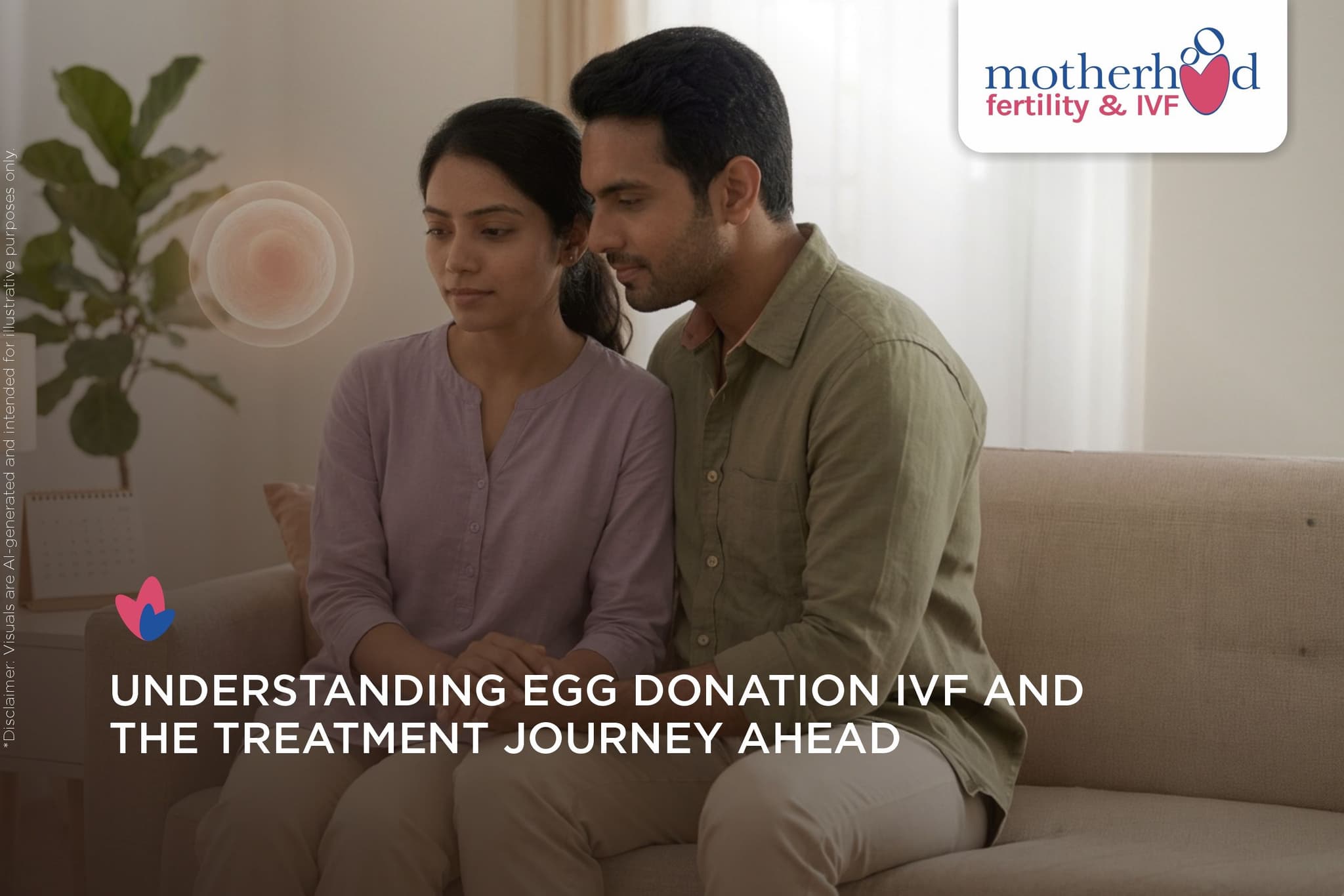

Fertility challenges can feel overwhelming for many individuals and couples, especially when repeated treatments do not lead to a successful pregnancy. Today, advances in reproductive medicine have created new possibilities for hopeful parents. One such option is egg donation IVF, which has already helped thousands of families worldwide. This approach grants renewed hope when egg quality or quantity becomes a limiting factor. It lets individuals and couples experience pregnancy and childbirth with the help of healthy donor eggs.
This article explains what egg donation IVF is, who it is meant for and how the entire process works. It also takes into account IVF success factors, emotional considerations, and costs of treatment.
What Is Egg Donation?
Fertilisation of eggs from a healthy donor using sperm is known as egg donation. The resulting embryo is then transferred into the recipient’s uterus. When this approach is combined with in vitro fertilisation, it is known as egg donation IVF.
In this treatment, the donor provides the eggs, while the recipient is the one who carries the pregnancy. Although the genetic material comes from the donor, the pregnancy experience, childbirth, and emotional bond are completely the recipient’s. For many who are hindered by infertility, this makes IVF with donor eggs a deeply meaningful path to parenthood.
Who Needs Donor Eggs?
Not all fertility-related challenges can be overcome by repeated stimulation or changes in treatment protocol. Sometimes, fertility experts will advise couples and individuals to consider donor egg fertility treatment. This is especially useful when egg quality or ovarian reserve is significantly compromised by infertility.
Doctors often recommend egg donation IVF for patients who have experienced repeated IVF cycle failures due to poor egg quality. These may include issues such as vacuolated eggs, eggs with a thick or dark zona, or embryos that show moderate to severe fragmentation. Such terms are commonly seen in IVF discharge summaries and indicate compromised egg potential.
This option is also suitable for:
- Women above the age of 37 with a reduced ovarian reserve
- Individuals with low AMH levels, elevated FSH levels, or reduced antral follicle count
- Those with premature menopause or premature ovarian failure
- Patients who have undergone the removal of one or both ovaries
- Women with poor response to ovarian stimulation despite high-dose medications
In addition, IVF with egg donor may also be advised for women over 40 with age-related fertility decline, individuals carrying genetic disorders they do not wish to pass on, or those who have experienced multiple unsuccessful IVF cycles. For these patients, using donor eggs often improves the overall chances of a successful pregnancy.
What Are the Requirements for Egg Donation? Who Are the Egg Donors?
In India, egg donation follows strict ethical and clinical guidelines laid down by the Indian Council of Medical Research. Under these regulations, egg donation is anonymous. Donors are typically young, healthy women who usually have at least one child of their own.
Before being accepted, donors undergo extensive medical, genetic, and psychological screening. This can include tests for infectious diseases like hepatitis and HIV, along with detailed health assessments. Only after all medical tests and legal formalities are completed is a donor enrolled in the programme.
This thorough screening process provides safety for both the donor and the recipient, which plays a vital role in maintaining favourable IVF treatment success rates.
Process of IVF With Donor Eggs
The process of IVF using donor eggs consists of several carefully coordinated steps to synchronise the donor and recipient cycles.
1. The First Step Is Donor Selection
Fertility clinics assist recipients in choosing a suitable donor, usually between 23 and 35 years of age. Matching is done based on physical characteristics such as height, weight, skin tone, eye colour, blood group compatibility, and medical background. Wherever possible, particular preferences of the recipient are also considered.
2. After Being Selected, the Donor Undergoes Ovarian Stimulation Treatment to Produce Multiple Eggs
These eggs are collected through a minor procedure known as egg retrieval, performed under mild sedation. The collected eggs are then fertilised using sperm from the recipient’s partner or a donor, depending on the situation.
3. After Fertilisation, the Embryos Are Monitored in the Laboratory
The best-quality embryo is chosen and transferred into the recipient’s uterus when her body is hormonally prepared. A pregnancy test is usually performed about 2 weeks after implantation to confirm pregnancy.
In some cases, couples may also opt for IVF with donor embryos, where both egg and sperm are from donors, offering another alternative for family building.
Advantages of IVF With Egg Donor
One of the biggest advantages of donor egg IVF is the higher likelihood of success. Since donor eggs typically come from younger women, embryo quality is often better, which directly influences implantation and pregnancy outcomes. As a result, the success rate of IVF with donor eggs is generally higher than IVF or IUI treatment using one’s own eggs at an advanced reproductive age.
Another benefit is the reduced risk of passing on inherited genetic conditions. This is particularly important for individuals with known genetic disorders. Additionally, egg donation allows women with age-related infertility or ovarian failure to experience pregnancy and childbirth, which many consider emotionally significant.
Success Factors for Egg Donation IVF
Multiple factors contribute to how successful donor egg IVF can be.
- One of the most important is donor age. Donors between 21 and 35 years typically produce higher-quality eggs and respond well to stimulation, commonly yielding an adequate number of eggs. Clinics also make sure the donor eggs have a low likelihood of genetic disorders and are in good overall health.
- The uterine health of the recipient is just as important. A receptive uterine lining, balanced hormones, and absence of untreated uterine conditions improve implantation chances. While there is no fixed rule for the minimum eggs required for IVF, having multiple good-quality eggs allows for better embryo selection and improved outcomes.
- Laboratory expertise, embryo culture techniques, and the experience of the fertility team also considerably affect donor egg IVF success rates.
Factors Affecting the Cost
The cost of egg donor IVF treatment can vary depending on a number of factors. Clinics in metropolitan areas may charge more due to advanced infrastructure and higher operating costs. The reputation of the fertility centre, the technology used, and lab quality also play a role.
The type of donor, number of cycles required, and additional procedures such as embryo freezing or advanced fertilisation techniques can additionally impact the total expense. Couples should discuss cost details clearly with their clinic before they start IVF or any other assisted reproductive treatment.
Emotional Impact of Egg Donation IVF
Egg donation IVF offers hope to many individuals and families, but it can also bring complex emotions. Some individuals may struggle with the idea of not having a genetic connection to their child. Others feel relief at finally having a realistic path to parenthood. Counselling is often recommended to help intended parents process these feelings and feel confident in their decision.
Over time, many parents find that the experience of pregnancy, birth, and raising a child far outweighs concerns about genetics. This is why emotional strength is also a key part of navigating the IVF journey.
Conclusion
Egg donation IVF has changed the possibilities of fertility care for many couples. It provides a realistic and viable solution for people facing egg-related infertility challenges. IVF with donor eggs continues to show encouraging outcomes, with careful donor screening, advanced laboratory techniques, and personalised medical care.
If you are considering this option as an assisted reproductive treatment, remember to discuss your medical history, expectations, and concerns with a fertility specialist. With appropriate guidance and support, IVF using donor eggs can be a powerful step toward building the family you have been hoping for.