
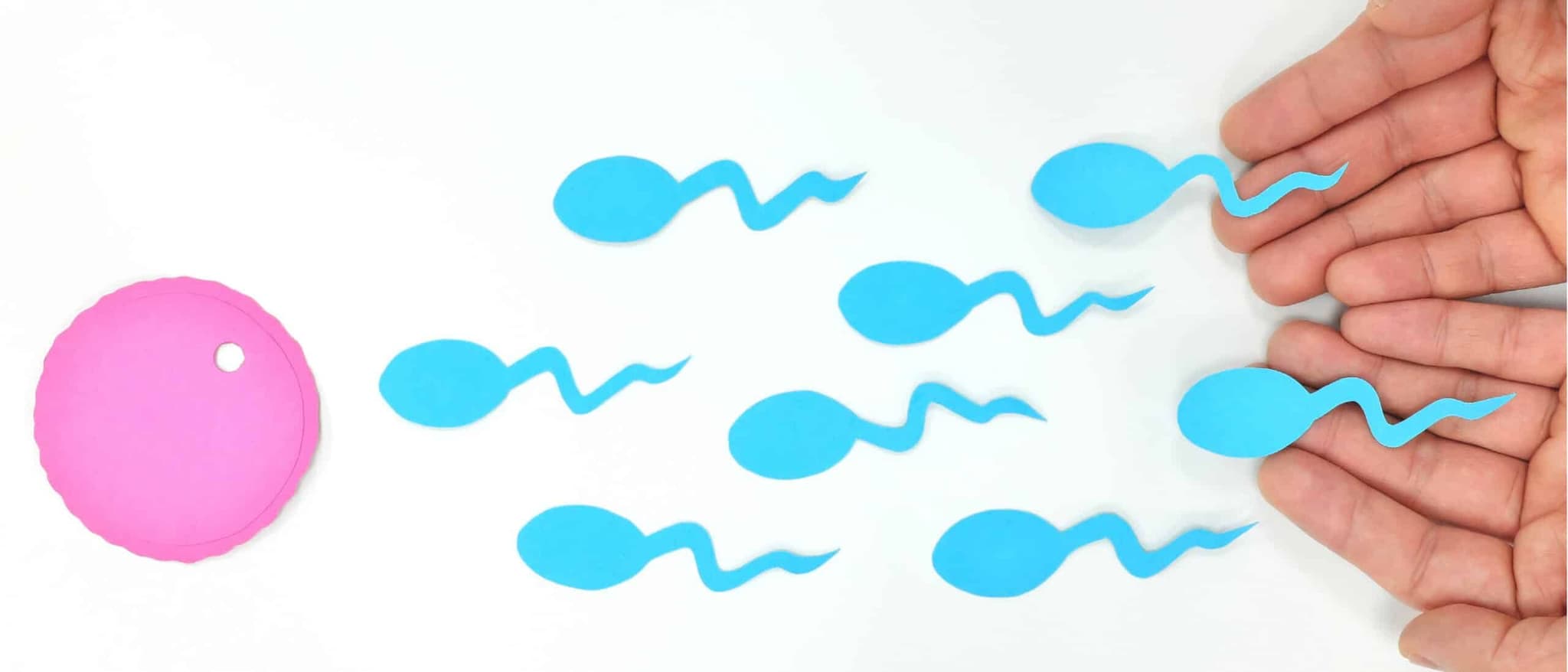

If you are wondering how to know if sperm went inside, the most important thing to understand is that there is usually no physical sensation, symptom, or change in vaginal fluid that can reliably confirm it.
A woman may feel semen being released during intercourse or notice wetness or fluid leaking from the vagina afterwards. However, sperm cells themselves are microscopic and cannot be felt entering the vagina, cervix, uterus, or fallopian tubes.
If ejaculation occurred inside the vagina during unprotected intercourse, sperm exposure should be considered possible. However, sperm entering the vagina does not mean that fertilisation or pregnancy has definitely occurred.
This distinction is important whether you are trying to conceive or trying to avoid pregnancy.
For fertilisation to occur, sperm must survive, travel through the cervix and uterus, reach a fallopian tube, and meet an available egg. Pregnancy can only be confirmed later with appropriate pregnancy testing.
What Happens When Sperm Is Released During Intercourse?
During ejaculation, semen is released from the penis. Semen is the fluid that carries sperm cells along with fluids produced by the male reproductive system.
When ejaculation occurs inside the vagina, semen is deposited within the vaginal canal. Sperm then begin moving through the reproductive tract.
Their possible journey is:
Vagina → Cervix → Uterus → Fallopian tube
If an egg has recently been released during ovulation, sperm may encounter it in the fallopian tube.
Only a small proportion of the sperm originally released will travel far into the reproductive tract. Most do not reach the egg.
Sperm can survive in favourable conditions within the female reproductive tract for up to about five days, which is why intercourse in the days before ovulation can still potentially result in pregnancy.
After intercourse, some semen commonly flows back out of the vagina. This is normal.
The fluid that comes out does not mean that every sperm has left the reproductive tract. Sperm capable of moving towards the cervix may already have begun doing so.
Therefore, semen leakage after intercourse cannot determine whether pregnancy is possible.
Why Fluid May Leak After Intercourse
Semen does not remain completely inside the vagina after ejaculation. Some fluid commonly leaks out because of gravity and normal vaginal movement.
What comes out may be a mixture of semen and vaginal secretions and can appear whitish, cloudy, clear, or watery.
Individual sperm cells cannot be seen with the naked eye.
Seeing fluid come out immediately or the next day does not mean that sperm failed to enter the reproductive tract.
How to Know If Sperm Went Inside
For anyone asking how to know whether sperm went inside or not, there is usually no reliable immediate sign.
If ejaculation definitely occurred inside the vagina, sperm exposure is likely.
However, when someone is unsure whether ejaculation occurred internally, physical sensations are not dependable enough to give a definite answer.
You cannot reliably confirm sperm entry based on:
- whether you felt ejaculation
- vaginal wetness
- semen leaking afterwards
- abdominal sensations
- cramps
- cervical mucus
- breast tenderness
- nausea
- fatigue
- vaginal discharge
Many of these symptoms can occur because of normal hormonal changes, ovulation, menstruation, sexual activity, or other factors.
Sperm cells are microscopic. A woman cannot feel individual sperm moving through the cervix, uterus, or fallopian tubes.
Why Physical Sensations Cannot Confirm Sperm Entry
A woman may feel the sensation of ejaculation or fluid entering the vagina during intercourse, but this is different from physically feeling sperm cells.
There is no unique sensation that proves sperm has entered the reproductive tract.
Likewise, it is not possible to feel sperm travelling into the uterus or reaching an egg.
Signs Sperm Entered Your Body
There are no medically reliable immediate symptoms that confirm sperm entered the vagina.
This is important because many symptoms described online as “signs sperm has entered your body” are actually related to sexual activity, ovulation, menstrual hormones, or early pregnancy.
Wetness After Intercourse
Wetness may come from semen, vaginal lubrication, or a mixture of both.
It can suggest that fluid was present but cannot prove where ejaculation occurred or how much semen entered the vagina.
Semen Leakage
It is common for fluid to leak from the vagina after intercourse, either immediately or several hours later.
This does not confirm or rule out pregnancy.
Sperm capable of travelling into the reproductive tract may already have moved towards the cervix before the remaining seminal fluid leaks out.
Abdominal Discomfort After Intercourse
Sperm entering the vagina itself should not normally cause abdominal pain.
Mild pelvic discomfort after intercourse can occur for other reasons, including pelvic muscle contractions, ovulation, deep penetration, or an underlying gynaecological condition.
Persistent, severe, or recurrent pelvic pain should be assessed by a healthcare professional rather than assumed to be caused by sperm.
Changes That Occur Later
Breast tenderness, nausea, fatigue, and a missed period may occur during pregnancy, but these symptoms develop later and cannot tell you whether sperm entered immediately after intercourse.
They can also occur for reasons unrelated to pregnancy.
How to Confirm If Sperm Has Entered the Body Medically
There is generally no routine home or clinical test performed immediately after intercourse simply to determine whether sperm entered the vagina.
The more useful question is usually whether the sexual contact could potentially result in pregnancy.
If ejaculation occurred inside the vagina—or there is uncertainty after unprotected intercourse—pregnancy may be possible depending on the timing of ovulation and other reproductive factors.
A pregnancy test cannot tell you immediately whether sperm entered.
Pregnancy tests detect human chorionic gonadotropin (hCG), a hormone produced after implantation begins. This happens later, not immediately after intercourse.
Home pregnancy tests are generally more useful around the time the next period is due. If menstrual cycles are irregular or the date is uncertain, a healthcare professional can advise when testing is appropriate.
Testing immediately or only a few days after intercourse is too early to reliably confirm pregnancy.
How to Know Whether Sperm Went Inside or Not in Special Situations
Pregnancy risk depends heavily on what happened during sexual contact.
Ejaculation Inside the Vagina
If ejaculation occurred inside the vagina without effective contraception, sperm should be considered to have entered and pregnancy is possible.
Whether pregnancy actually occurs depends on ovulation timing, sperm health, reproductive health, and other factors.
Withdrawal Before Ejaculation
If the penis was completely withdrawn before ejaculation, the chance of semen entering the vagina may be lower, but pregnancy risk is not zero.
Pre-ejaculatory fluid can sometimes contain sperm, and withdrawal can fail if ejaculation begins before complete withdrawal.
For this reason, withdrawal is not considered a completely reliable contraceptive method.
Condom Use and Condom Failure
If a condom remained intact and was used correctly throughout intercourse, semen should remain inside the condom.
If the condom:
- broke
- slipped
- leaked
- came off during intercourse
there may be a risk of sperm exposure.
Ejaculation Near the Vaginal Opening
If fresh semen is released directly on or very close to the vaginal opening, pregnancy is biologically possible even without ejaculation deep inside the vagina, although the level of risk depends on the circumstances.
Fresh semen near the vaginal opening is different from dried semen or semen on distant areas of skin.
Understanding Pre-Ejaculate and Withdrawal
Pre-ejaculate, or pre-cum, is fluid that can be released from the penis before ejaculation.
It does not always contain sperm, but sperm may sometimes be present. Because this cannot be determined by appearance or sensation, pregnancy is possible even when ejaculation was intended to occur outside the vagina.
If unprotected intercourse occurred and pregnancy is not desired, seek advice promptly about emergency contraception.
After Oral or External Contact
Oral sex does not cause pregnancy because sperm swallowed through the mouth cannot travel to the uterus or ovaries.
Semen on the abdomen, thighs, or other external skin also does not automatically cause pregnancy.
For pregnancy to occur naturally, sperm generally needs access to the vagina and reproductive tract.
If fingers or another object carrying fresh semen are immediately inserted into the vagina, the possibility of sperm exposure depends on the amount of fresh semen present and the circumstances.
Dried semen on skin, clothing, or surfaces does not pose the same pregnancy risk because sperm quickly lose viability once semen dries.
What Actually Indicates Fertilisation
Sperm entering the vagina is only the beginning of a possible sequence leading to pregnancy.
For fertilisation to occur:
- an egg must be released from the ovary
- viable sperm must reach the fallopian tube
- a sperm must fertilise the egg
- the fertilised egg must continue developing
- the developing embryo must reach the uterus
- implantation must occur
There is no physical sensation that reliably tells a woman the exact moment when sperm meets an egg.
Symptoms sometimes described as “symptoms when sperm meets egg” cannot confirm fertilisation.
Early pregnancy symptoms occur later and can overlap with normal premenstrual symptoms.
A properly timed pregnancy test is therefore far more useful than trying to identify fertilisation through bodily sensations.
Sperm Survival and the Fertile Window
Sperm may survive for up to about five days within the female reproductive tract when conditions are favourable, particularly around ovulation.
This means intercourse does not need to occur on the exact day of ovulation for pregnancy to be possible.
Sperm present in the reproductive tract from intercourse several days earlier may still fertilise an egg once ovulation occurs.
Outside the body, sperm survival is much shorter, particularly once semen has dried.
Semen Volume and Pregnancy Risk
There is no reliable number of “drops” of semen required for pregnancy.
Even a small amount of semen may contain sperm.
Pregnancy risk depends on several factors, including:
- whether sperm entered the vagina
- sperm concentration
- sperm motility
- sperm morphology
- timing relative to ovulation
- female reproductive health
The volume or thickness of semen alone cannot tell you whether pregnancy will occur.
If male fertility is a concern, semen analysis provides more useful information than judging semen by appearance or volume.
Leakage Does Not Mean Conception Is Impossible
Pregnancy can still occur even when semen leaks from the vagina after intercourse.
Leakage is normal because the vagina does not retain all of the seminal fluid.
Motile sperm may begin moving towards the cervix soon after ejaculation, while some of the remaining fluid later flows out.
Trying to prevent leakage by raising the legs, remaining in bed for a long period, or avoiding urination has not been shown to determine whether conception occurs.
Next Steps Depend on Whether Pregnancy Is Desired
If you are trying to conceive and ejaculation occurred inside the vagina during the fertile window, there is no need to repeatedly check vaginal discharge or physical sensations.
Wait until the appropriate time for pregnancy testing.
If you are not trying to become pregnant and unprotected intercourse occurred, a condom failed, withdrawal was uncertain, or semen may have entered the vagina, seek advice about emergency contraception promptly.
Do not attempt to remove sperm by:
- vaginal washing
- douching
- urinating
- bathing
- inserting products into the vagina
These methods do not reliably prevent pregnancy once sperm has entered the reproductive tract.
If your period is delayed, take a pregnancy test at the appropriate time.
Frequently Asked Questions
What are signs sperm entered your body?
There are no specific immediate symptoms that reliably prove sperm entered the vagina. Wetness, semen leakage, cramps or discharge may occur after intercourse but cannot confirm or rule out sperm entry.
Can you get pregnant if sperm leaks out?
Yes. Semen leakage after intercourse does not necessarily prevent pregnancy because sperm may already have entered the reproductive tract before the remaining seminal fluid leaks from the vagina.
How soon can pregnancy be detected?
Pregnancy cannot be detected immediately after intercourse. A home pregnancy test is generally more useful around the time the next period is due. Testing too early may give a negative result even if conception has occurred.
Can you tell if ejaculation happened inside the vagina?
Physical sensations alone may not reliably determine where ejaculation occurred. Some people feel ejaculation clearly while others do not. If there is uncertainty after unprotected intercourse, do not rely only on sensation to assess pregnancy risk.
Can pre-ejaculate cause pregnancy?
Yes, pregnancy is possible because pre-ejaculatory fluid may sometimes contain sperm. This is why withdrawal can reduce exposure but is not considered a completely reliable method of preventing pregnancy.
What should I do if I am unsure whether sperm entered?
If pregnancy is desired, wait until the appropriate time to test. If pregnancy is not desired after possible unprotected exposure, seek advice about emergency contraception promptly and take a pregnancy test later if required.
Conclusion
If you are trying to understand how to know if sperm went inside, physical sensations, wetness, and vaginal discharge cannot provide a definite answer.
If ejaculation occurred inside the vagina, sperm exposure should be considered possible. If ejaculation occurred near the vaginal opening, withdrawal was uncertain, or a condom failed, there may also be some pregnancy risk depending on the circumstances.
Semen leaking out afterwards is normal and does not mean all sperm have left the reproductive tract. Likewise, cramps, nausea, breast tenderness, or other bodily changes immediately after intercourse do not confirm that sperm entered, fertilisation occurred, or pregnancy has begun.
If pregnancy is desired, focus on intercourse timing and appropriate pregnancy testing rather than trying to identify sperm entry through symptoms. If pregnancy is not desired after possible unprotected exposure, seek medical advice about emergency contraception promptly.
If you have concerns about conception, intercourse timing, or fertility, you can speak with a fertility specialist at Motherhood Fertility & IVF by calling 080 6723 8900, writing to info@motherhoodivf.com, or booking an appointment for personalised guidance.